Case Study · Enterprise SaaS · AI

Conversational AI for Strategic Revenue Execution

Designing AI-driven coaching and execution experiences for enterprise sales teams at Altify.

Role
Senior Product Designer
Company
Altify
Year
2025 - Present
Project Type
Conversational Design · AI · UX Strategy · Enterprise SaaS

/ Overview

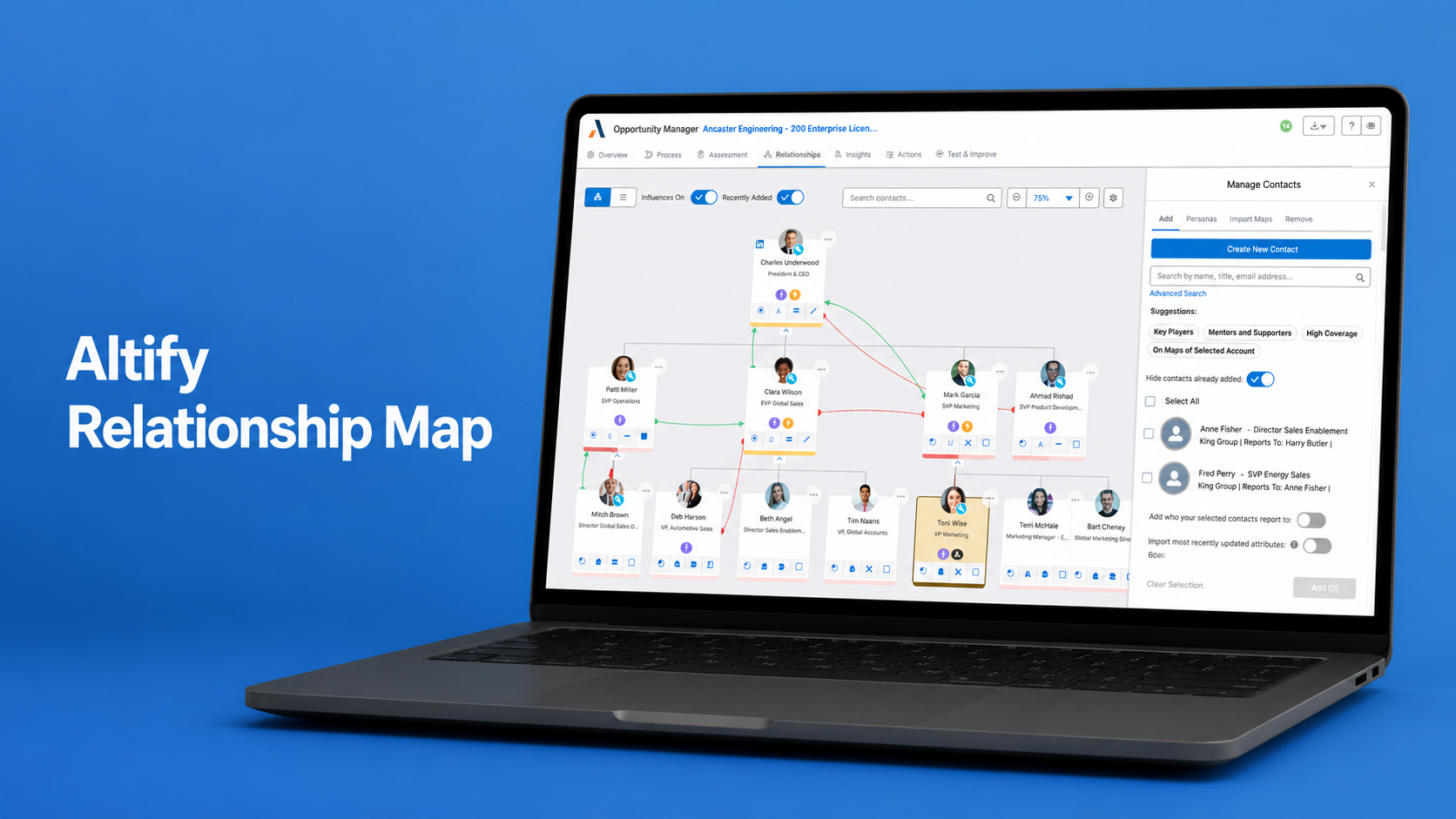
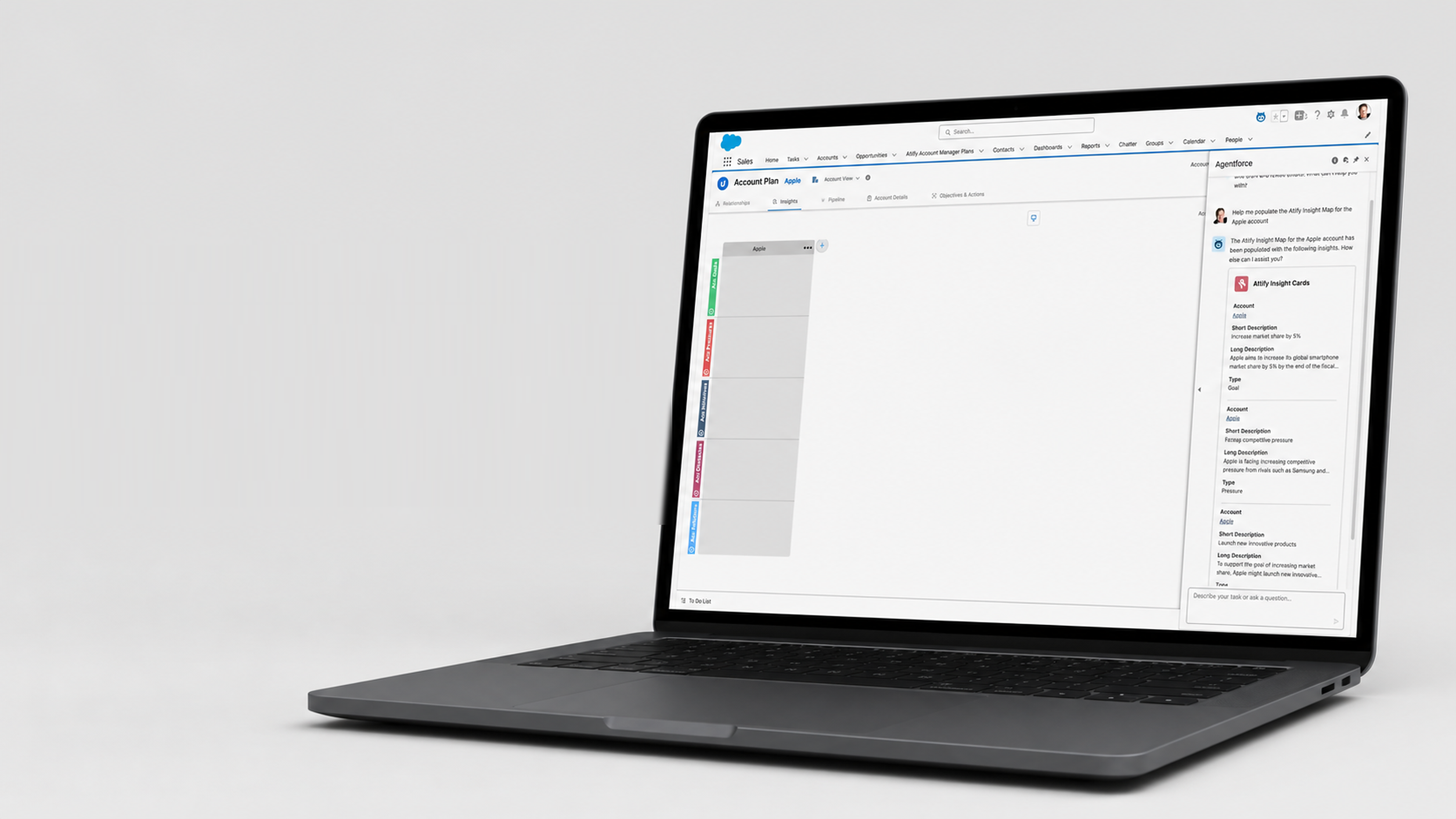
Enterprise sellers work across fragmented systems - CRM, email, Slack, call transcripts and executive reviews. At Altify I worked on multiple AI-driven initiatives helping sellers and leaders prioritise work, spot risks earlier and increase forecast confidence.

Conversational design principles

  • Understand sales methodology context
  • Explain reasoning
  • Surface evidence
  • Avoid generic outputs
  • Guide action clearly

/ Problem to Solve

Core problem

Enterprise sales teams spend too much time gathering context and not enough time acting on it.

Users needed to manually

  • Analyse opportunities
  • Review account risks
  • Identify missing stakeholders
  • Prepare executive updates
  • Synthesise CRM and meeting information
  • Decide where to focus

This created

  • Inconsistent execution
  • Slower deal progression
  • Lower adoption of strategic planning tools
  • Forecast inaccuracies
  • Seller frustration

Challenges

ChallengeUX response
AI outputs felt genericAdded contextual reasoning and editability
Users overwhelmed by CRM dataShifted toward prioritised summaries
Low trust in automationIntroduced explainability and evidence
Too many disconnected workflowsDistributed experiences across channels
Insights surfaced too lateDesigned proactive execution alerts

Key discovery insights

From workshops, journey maps and ideation sessions, several recurring themes emerged:

  • "I don't know where to start." Users struggled to identify the highest-priority action for the day.
  • "AI summaries are too generic." Many AI outputs lacked strategic relevance and required heavy editing.
  • "The system reacts too late." Insights were often surfaced after risks already escalated.
  • "Why not an output-driven approach, more proactive?" This workshop note became a major strategic direction.
  • "We already work in Slack and Teams." Users didn't want another dashboard. They wanted insights delivered where work already happens.

/ Business Goal

Goals were directly aligned with strategic revenue execution and AI adoption objectives.

Increase strategic planning adoption

Encourage users to engage more consistently with account plans, relationship maps and opportunity coaching workflows.

Improve forecast accuracy

Help leaders identify deal risks earlier through AI-generated insights and conversational summaries.

Reduce seller friction

Minimise time spent navigating CRM records and manually gathering context.

Increase AI trust and usage

Design AI interactions that feel explainable, contextual and actionable - not generic automation.

Position Altify as an AI-first revenue platform

Differentiate the product in the enterprise sales market through embedded conversational intelligence.

/ Personas

Three primary personas drove design decisions across the experience.

Strategic Account Manager

Experienced enterprise seller managing a small number of high-value accounts.

Goals
  • Protect strategic accounts
  • Identify risks early
  • Maintain executive relationships
  • Progress large multi-stakeholder deals
Pain points
  • Hard to understand account sentiment quickly
  • Relationship gaps are often discovered too late
  • Executive summaries take too long to prepare
Needs
  • AI-generated account insights
  • Stakeholder coaching
  • Relationship mapping guidance
  • Prioritised actions

Sales Leader / CRO

Responsible for forecast accuracy and pipeline health across multiple teams.

Goals
  • Identify pipeline risk
  • Improve coaching consistency
  • Increase seller execution quality
  • Reduce forecast surprises
Pain points
  • Forecast reviews rely heavily on seller opinion
  • Hard to detect weak execution patterns
  • No centralised view of coaching impact
Needs
  • Executive summaries
  • Risk alerts
  • Deal health visibility
  • AI-generated recommendations

Ramp-Up Seller

Newer seller learning strategic sales methodologies.

Goals
  • Understand what good account planning looks like
  • Learn how to navigate complex deals
  • Gain confidence in customer conversations
Pain points
  • Overwhelmed by process complexity
  • Unsure which actions matter most
  • Struggles identifying missing stakeholders
Needs
  • Guided coaching
  • Conversational onboarding
  • Clear next-best actions
  • Context-aware recommendations

/ User Flows

Three core flows shaped how the conversational experience reaches users - from starting the day to executive readiness.

Flow 1 · "What should I work on today?"

Goal: Provide sellers and leaders with proactive AI-generated prioritisation directly through Slack, Microsoft Teams or Email - instead of forcing users into the product first.

User flow
  1. Step 1. AI continuously analyses account activity, deal movement, stakeholder engagement, forecast changes, relationship health and opportunity stages.
  2. Step 2. User receives a proactive summary: opportunities at risk, missing stakeholders, stalled actions, upcoming priorities and recommended next steps.
  3. Step 3. User selects a recommendation.
  4. Step 4. AI opens the contextual workflow with deeper guidance.
Strategic UX shift

Originally the experience focused on reporting. The direction evolved into proactive conversational execution guidance - a foundational product strategy change.

Flow 2 · AI executive summary generation

Goal: Generate leadership-ready summaries from CRM data, account plans, meeting activity, coaching notes, opportunity changes and relationship insights.

User flow
  1. Step 1. AI aggregates account signals.
  2. Step 2. AI generates a strategic summary, key risks, blockers, relationship concerns and execution recommendations.
  3. Step 3. User edits and validates the output.
  4. Step 4. Summary shared with leadership.
Key UX decision

The experience intentionally prioritised editability, transparency and human validation instead of full automation - which improved trust significantly.

/ UX Strategy

Five conversational UX principles shaped the experience.

1. Proactive over reactive

The product should not wait for users to ask questions. The system should proactively surface:

  • Risks
  • Priorities
  • Coaching opportunities
  • Strategic gaps

This became one of the most important strategic shifts in the project.

2. Meet users where they work

Instead of pulling users into the CRM repeatedly, insights were distributed through:

  • Slack
  • Teams
  • Email

This reduced friction dramatically.

3. AI must be explainable

Trust was critical. The experience included:

  • Evidence-based recommendations
  • Visible reasoning
  • Contextual explanations
  • Editable outputs

Users needed confidence before acting on AI recommendations.

4. Reduce cognitive load

The UX intentionally avoided long AI-generated paragraphs, excessive dashboards and overly technical outputs. The focus became:

  • Prioritisation
  • Concise recommendations
  • Progressive disclosure
  • Actionable insights

5. Design for multiple experience levels

Senior sellers wanted strategic insights. Junior sellers needed guided execution. The conversational experience adapted depth and coaching style based on user maturity.

/ Conclusion

This work explored how conversational design can fundamentally transform enterprise SaaS experiences. Instead of designing AI as a standalone assistant, the focus became integrating intelligence directly into strategic execution workflows.

More importantly, it reframed conversational AI from "chat interfaces" into embedded strategic workflow intelligence.

The strongest insight

Enterprise conversational AI succeeds when it reduces thinking, increases trust, and helps users act faster with confidence.

Outcome

The project established the foundation for:

  • AI-driven revenue execution
  • Conversational coaching
  • Proactive prioritisation
  • Strategic account intelligence
  • Executive-level AI summaries

The result

A scalable conversational framework capable of supporting:

  • Sellers
  • Sales leaders
  • Strategic account teams
  • Executive stakeholders

...through proactive, explainable and context-aware AI experiences.